Airline Tycoon Game that
feels
like a
real thing

The client is an aviation enthusiast with hands-on experience in the airline industry.
For this project, the client needed wireframes, user flows, and a high-fidelity UI for an airline tycoon simulation game.

The airline industry is complex. It takes years to fully understand how an airline is operated and managed, including concepts such as traffic and demand distribution. Despite how broad the field is, there was no existing UX or UI to serve as a reference point for this project. The key challenges were to:
The following areas also needed fresh UX and UI thinking:
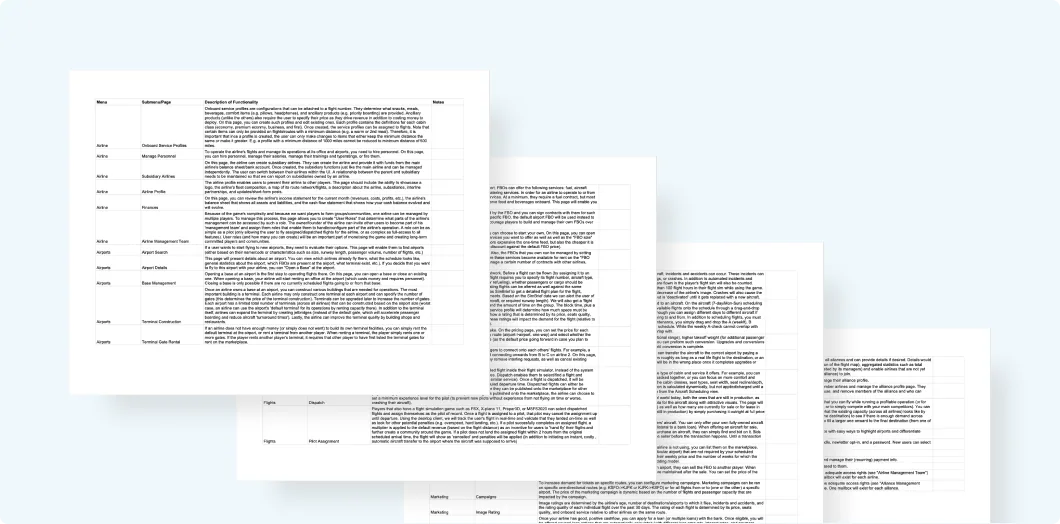
As for competitors, the closest thing out there (including complex concepts such as connecting traffic and demand distribution) is airlinesim.aero, but its UI lacks refinement in many areas.

Functionality was handed to me as Jira epics and user stories. Each user story had a priority and a design estimate (in days), and we worked in 14-day sprints. For each user story, I repeated these steps:
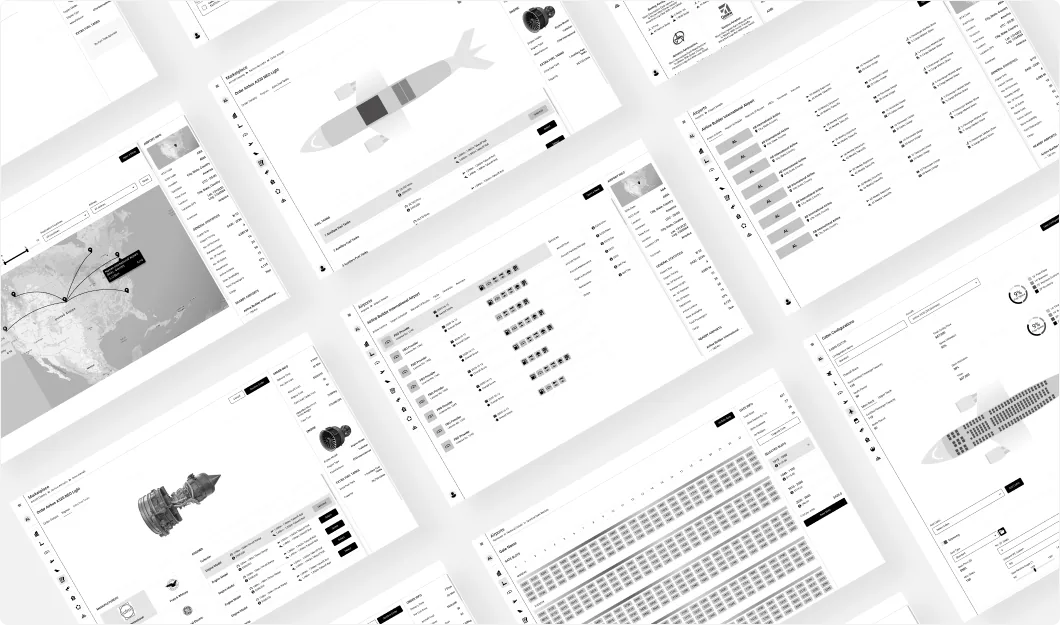
I created low-fidelity wireframes to conceptualize various screens to test different ideas for a given user story. This clarified the information architecture and made workflows clearer and more efficient.
Each wireframe was reviewed in detail with stakeholders to validate assumptions and gather feedback. These discussions made it clear that consistent, industry-standard terminology was needed for a better experience.
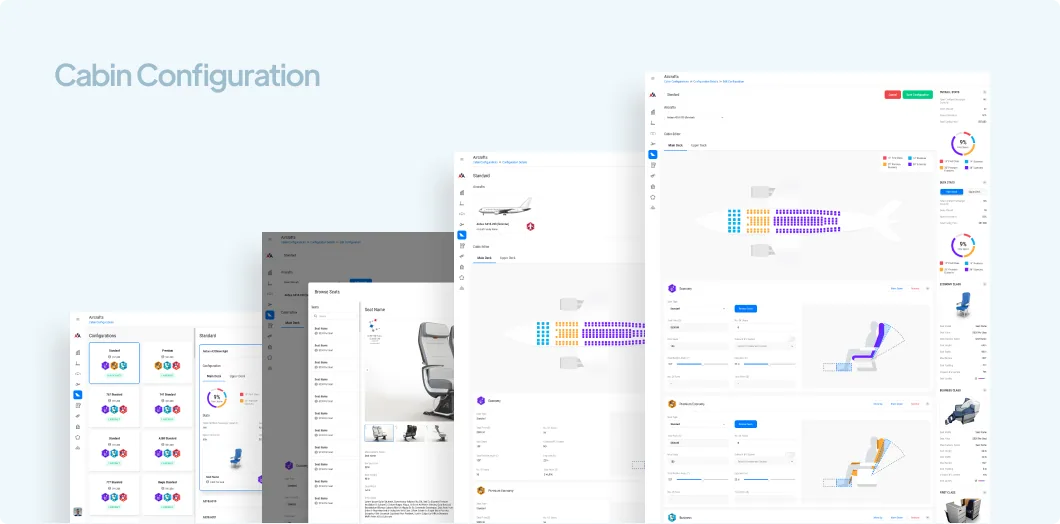
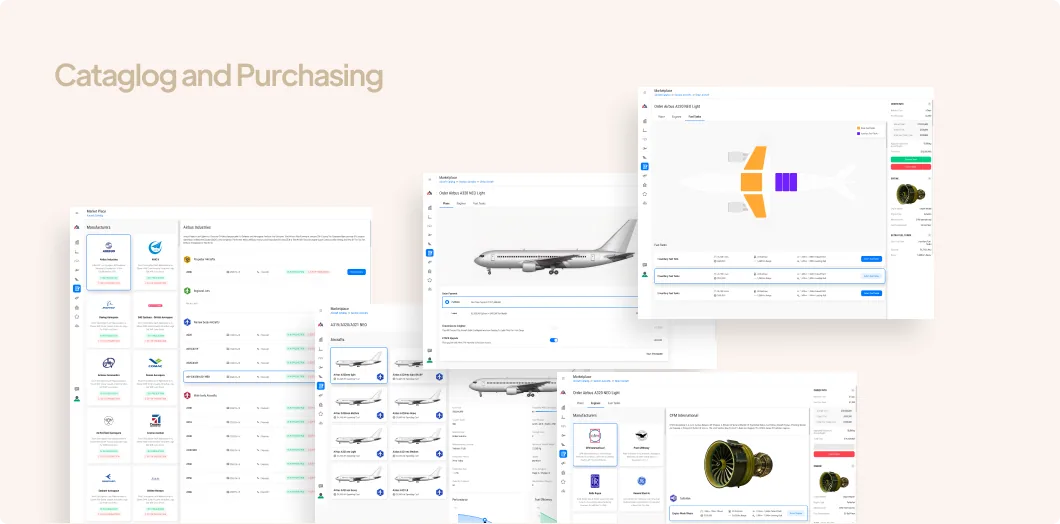
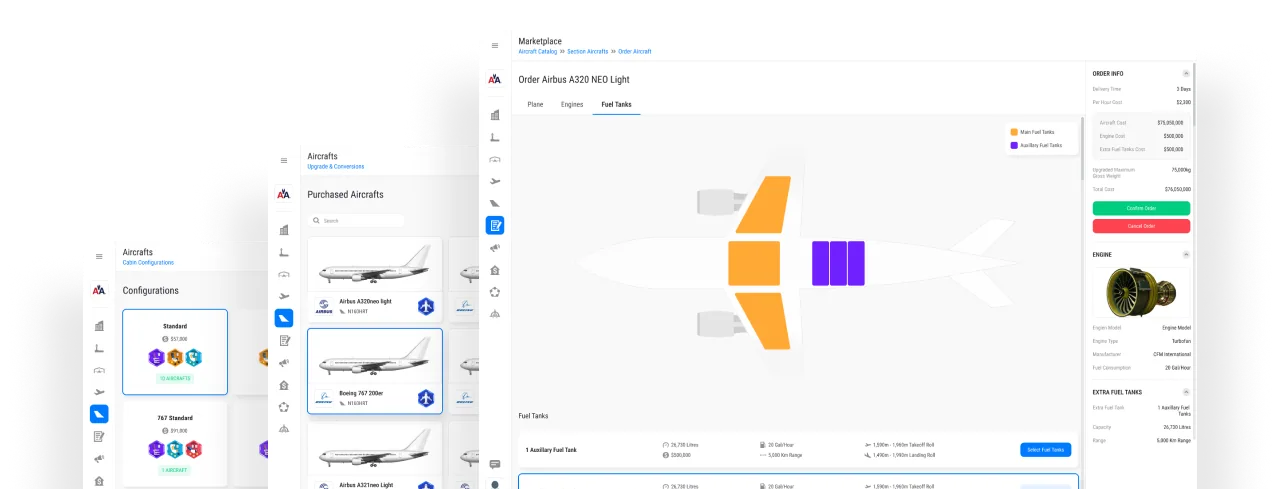
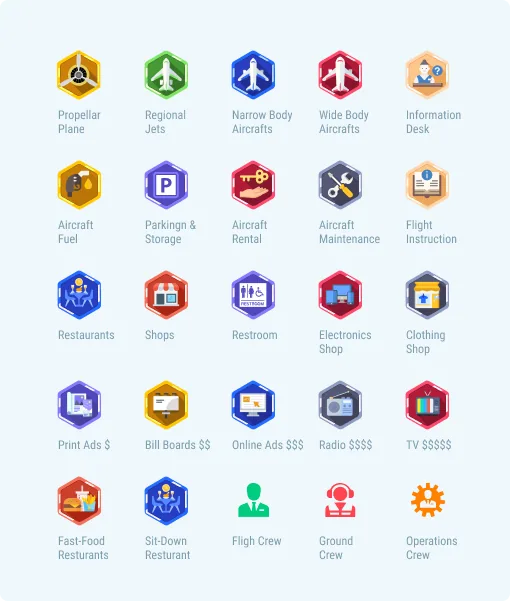
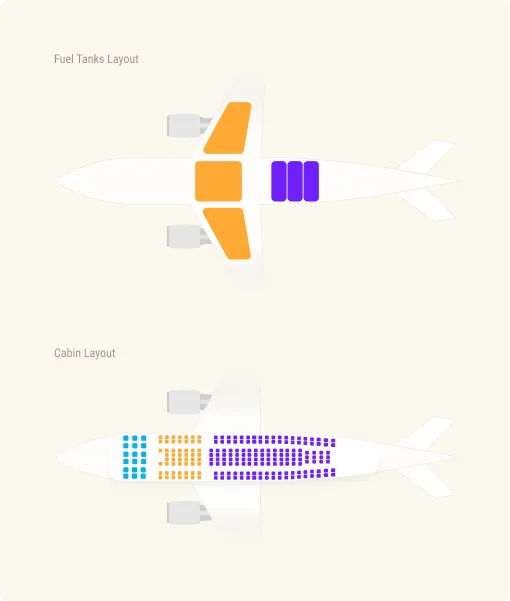
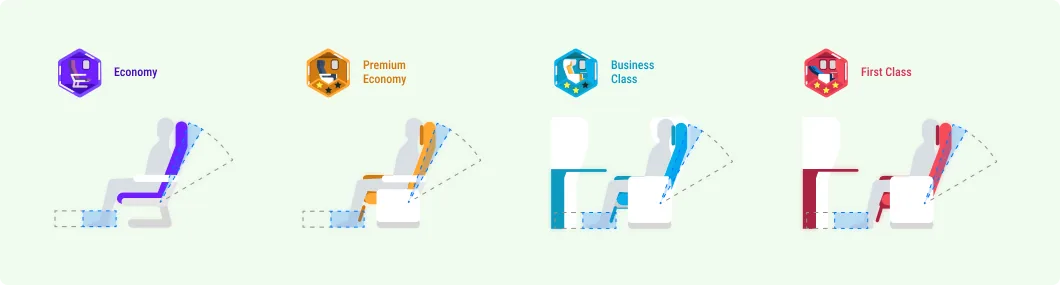
Despite the conceptual complexity, gamification principles were applied to make the gameplay enjoyable and engaging. This included icon design, configurable cabins and passenger seating, modifiable fuel tanks, and gamified stats and reporting.
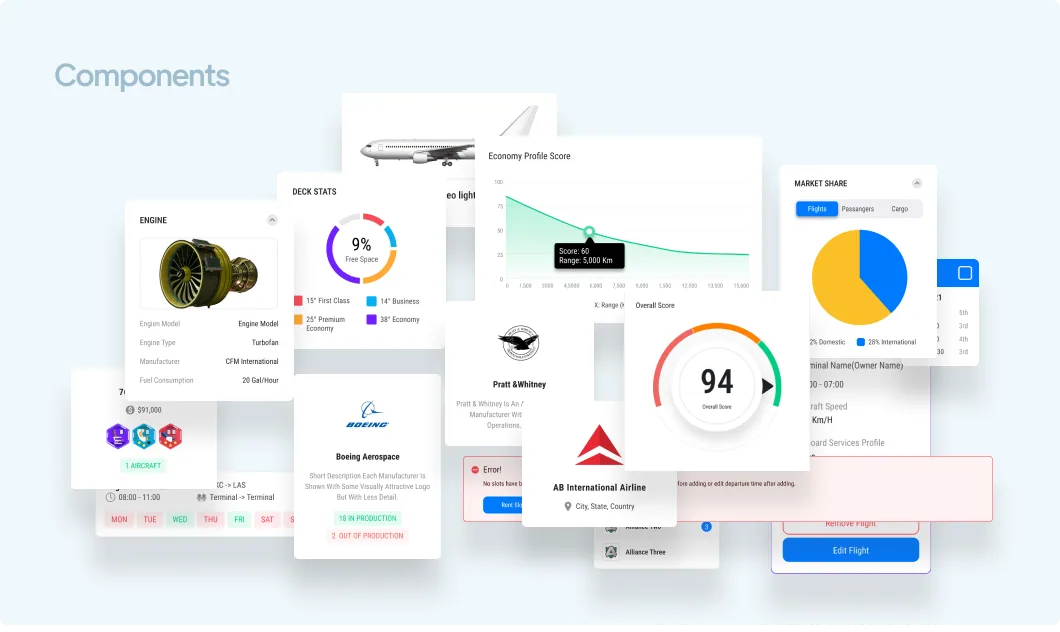
Once the low-fidelity wireframes were finalized, I turned them into high-fidelity UI designs, refining color, shape, typography, size, and spacing to bring the game to life.